
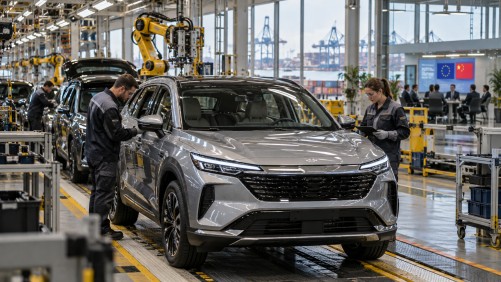
In a move that could significantly impact the automotive industry, China and the European Union have reached an agreement aimed at curbing the export of hybrid vehicles from China to Europe. This development is poised to create challenges for Chinese automakers, potentially prompting them to expand their manufacturing operations within Europe. The agreement emerges as Chinese vehicle exports continue to grow, intensifying competition in the European market.
During the first half of 2026, Chinese hybrid vehicle exports to the EU soared to $7.5 billion, a significant increase from $2.5 billion in the same period the previous year. This surge is partly attributed to the popularity of plug-in hybrids, which became more attractive following the EU’s imposition of additional tariffs on Chinese-made fully electric vehicles in 2024. Unlike their electric counterparts, hybrid models were exempt from these duties, leading to increased demand.
Chinese manufacturers such as BYD, SAIC, and Chery have made considerable inroads into the European market, capitalizing on the demand for vehicles that combine traditional engines with electric driving capabilities. However, this rapid growth has heightened competitive pressures on European automakers like Volkswagen.
While the specifics of the new agreement, including potential import quotas and implementation guidelines, are still being finalized, Chinese authorities have indicated that the arrangement would allow for continued export growth. Conversely, EU officials anticipate that the deal will gradually limit the volume of imported vehicles.
Industry executives have largely welcomed the agreement as a means to prevent escalating trade tensions. For instance, Changan has suggested that local production could help Chinese manufacturers maintain their market presence in Europe, with plans for regional production already in motion.
Analysts believe this agreement might incentivize Chinese automakers to establish more manufacturing facilities within Europe. While larger companies may have the resources to absorb the investment costs, smaller manufacturers could face more significant challenges in expanding their operations.
Although the deal may temporarily alleviate tariff-related concerns, uncertainties surrounding future import limitations remain. The long-term effects will hinge on the finalized rules and how both Chinese and European manufacturers adjust their pricing, production, and market strategies in response.