
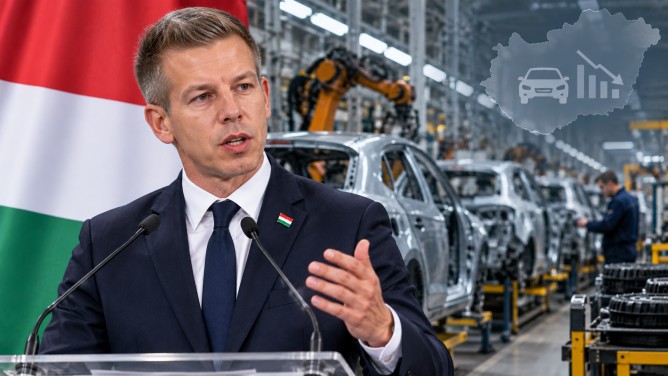
Hungary has firmly positioned itself as a pivotal hub for the European automotive industry, thanks to substantial investments from international car manufacturers. Yet, a potential transformation looms on the horizon as Prime Minister Péter Magyar’s administration contemplates implementing more rigorous environmental regulations, scaling back corporate incentives, and raising wages. Such policy shifts could significantly impact the automotive landscape in Hungary, a country that has attracted major players such as BMW, Mercedes-Benz, and Volkswagen. BMW has notably invested nearly €2 billion in its Debrecen plant, which boasts an annual production capacity of 150,000 vehicles. Meanwhile, Mercedes-Benz is enhancing its Kecskemét facility, and Volkswagen maintains extensive engine and vehicle production operations in Győr.
The country has also made strides in the electric mobility and battery sectors. Chinese automaker BYD is working on a passenger-car plant in Szeged, while CATL and EVE Energy are setting up battery manufacturing facilities in the vicinity of Debrecen. Additionally, South Korean firms like SK Group and Samsung have established battery plants in Hungary. The automotive sector has thrived under Hungary’s favorable 9% corporate tax rate and its relatively low labor costs, which stood at approximately €15.20 per hour in 2025, a stark contrast to Germany’s €45 per hour. Projections indicate that Hungary could reach an annual vehicle production of about 541,000 units by 2028.
However, the new governmental approach may present challenges for battery manufacturers. The authorities have initiated regulatory actions against CATL due to concerns over wastewater disposal, and Semcorp has faced operational suspensions linked to environmental and fire-safety violations. Additionally, Magyar has proposed imposing higher fees on polluting enterprises and scaling back tax incentives for multinational corporations. A proposed increase in the minimum wage to 1 million forints by 2030 could also escalate production costs, prompting industry stakeholders to caution that such changes might undermine the competitiveness of Hungary’s battery and electric-vehicle manufacturing sector.
The ramifications of these changes could extend beyond Hungary’s borders, impacting Austria, which exported €925 million worth of automotive components to Hungarian factories in 2024. Austrian suppliers play a crucial role by providing electric motors, steel components, and other essential parts to Hungary’s automotive industry. Despite these potential challenges, industry leaders assert that Hungary remains a key player in manufacturing, technology transfer, autonomous-vehicle development, and research partnerships. However, they emphasize that the future trajectory of the sector will be significantly influenced by the policy decisions enacted by Magyar’s government.