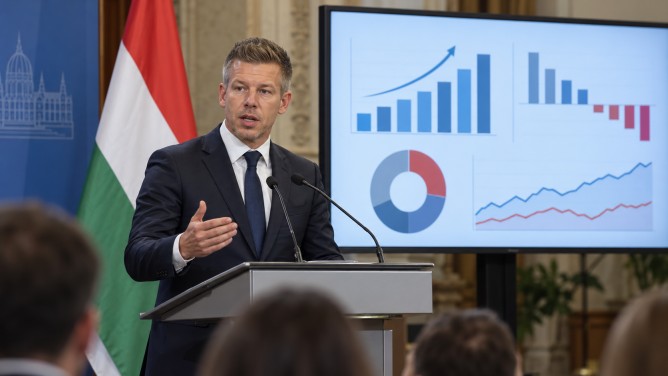
Hungarian Prime Minister Péter Magyar has introduced a proposed 2027 budget that aims to address the country’s economic challenges with significant tax reforms and increased public spending. The budget targets a deficit of 4.9% of GDP and includes expanded social benefits, pay raises for public-sector workers, and additional funding for healthcare. Following the announcement, Hungary’s currency, the forint, experienced a temporary strengthening.
Key elements of the budget proposal include a doubling of family allowances and a substantial increase in the minimum monthly pension from 28,500 forints to 120,000 forints. The government also plans to continue the 13th-month pension and introduce the first weekly payment of a 14th-month pension. Additionally, 677 billion forints are earmarked for salary increases for over 600,000 public-sector employees, while 510 billion forints will be allocated to healthcare improvements. Municipal budgets are set to receive an additional 64 billion forints, and a 100-billion-forint program aims to address road maintenance and pothole repairs.
The budget’s tax measures propose reducing the personal income tax rate from 15% to 9% for earnings up to the minimum wage, effective January 1. However, changes to tax exemptions for mothers introduce an income ceiling of one million forints per month and exclude certain mothers over 40 with two children from the benefit. To balance the budget, the government plans to save 1,500 billion forints, collect 200 billion forints through a wealth tax, and raise the corporate tax rate from 9% to 11% for companies with annual revenue exceeding 180 billion forints. Additional savings of 246 billion forints are expected from concession fees.
The proposed budget has faced criticism from Fidesz politician Balázs Orbán, who argues that the restrictions on family tax benefits could undermine existing provisions. He contends that the measures would negatively impact mothers over 40 with two children by removing their planned full income tax exemption, and younger mothers could face taxation on income exceeding the specified threshold. Orbán also claims that these restrictions have been introduced under pressure from Brussels.