
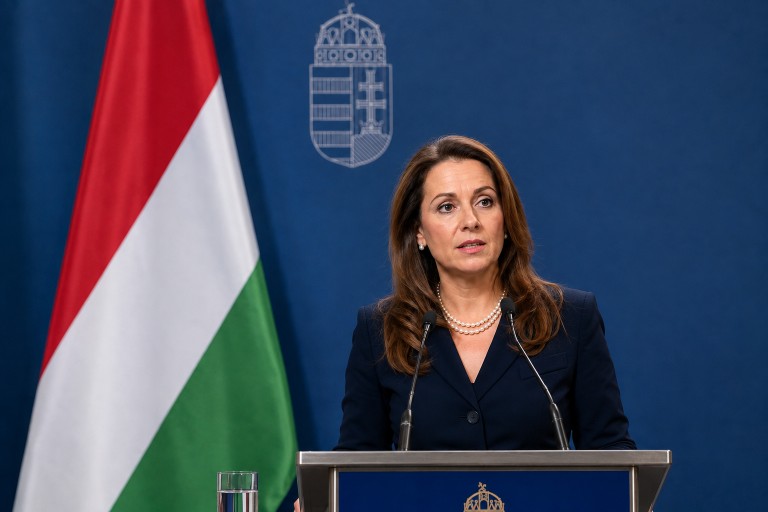
In her first few months in office, Hungarian Foreign Minister Anita Orbán has encountered significant criticism, with detractors pointing out that her focus seems more on enhancing her ministry’s image rather than achieving substantial diplomatic outcomes. This period has been marked by numerous challenges, including an energy crisis that has put pressure on the country’s resources, a persistent drought, and alarmingly low water levels along the Danube River. These issues have prompted critics to question the government’s handling of these crises and call for more robust international collaboration to effectively tackle them.
The Foreign Ministry came under fire for its handling of a situation involving Hungarian tourists in Sicily, who were left stranded following Mount Etna’s volcanic eruption, which led to numerous flight cancellations. Questions were raised about the adequacy of the support offered by Hungary’s diplomatic mission during this emergency, highlighting concerns about the ministry’s readiness to assist its citizens abroad.
Throughout Orbán’s initial 100 days, a significant reshuffle took place within the diplomatic ranks, with 62 ambassadors and mission chiefs relieved of their duties in two separate phases. Critics have warned that these dismissals could potentially disrupt the operational efficiency of Hungary’s diplomatic network, possibly hindering the country’s international relations and diplomatic endeavors.
In an effort to bolster the ministry’s public profile, Orbán has initiated a communications campaign designed to showcase its operations and the capacity of its diplomatic facilities. Despite these efforts to enhance visibility, critics maintain that the first 100 days have yielded limited progress in advancing Hungary’s foreign policy and safeguarding its national interests.