
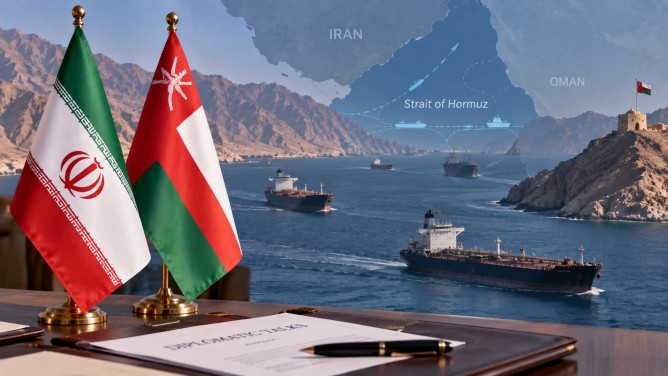
A critical meeting involving Iran, Oman, and other Gulf nations to discuss new shipping protocols in the Strait of Hormuz has been delayed indefinitely, with no new date set. This gathering was to be held in Muscat, focusing on regional security and a collaborative Iran-Oman proposal aimed at managing commercial maritime traffic through this pivotal passageway.
Oman’s Foreign Minister, Badr Albusaidi, indicated that the decision to postpone was made to foster consensus among participating nations. Iran corroborated this, stating the postponement was agreed upon with Oman in response to requests from several regional stakeholders. The delay follows an incident where an Iranian commercial ship was reportedly attacked near Qeshm Island, resulting in one fatality and injuries to four crew members. Maritime officials noted the vessel was hit by a projectile, leading to a fire and necessitating the crew’s evacuation.
In prior discussions, Iran and Oman had explored the possibility of rerouting shipping traffic through the Strait of Hormuz, suggesting that inbound vessels enter via Iranian waters while outbound vessels would utilize both Iranian and Omani waters. However, Iran has maintained that any reopening of the strait hinges on specific conditions being met, including the potential imposition of fees on vessels using the proposed routes.
The reduction in commercial traffic through this critical waterway, a key conduit for global oil shipments, remains a pressing issue for the energy markets worldwide. The postponement of the talks adds to the ongoing diplomatic tensions in the Gulf region. Saudi Arabia has reportedly requested amendments to the Iran-Oman plan, while Bahrain has opted out of participating in the discussions altogether.
Amidst this uncertainty, oil prices have surged, exacerbated by Saudi Arabia’s continued closure of its 1,200-kilometer East-West oil pipeline following drone attacks. This closure limits alternative crude transport routes to the Red Sea, potentially jeopardizing a significant portion of global oil supplies. As regional tensions escalate, Brent crude prices have climbed above $100 per barrel, reflecting the market’s response to the instability around the Strait of Hormuz and the broader Gulf region.