
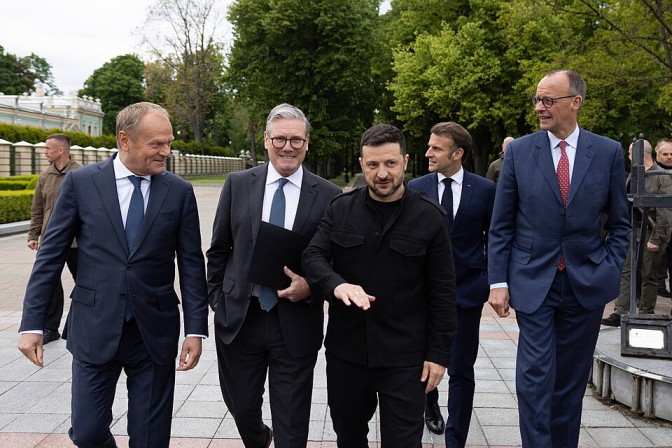
British Prime Minister Keir Starmer’s resignation has elicited a wave of commendations from European leaders, who have highlighted his efforts in mending ties between the United Kingdom and Europe. In light of his departure, the anticipated EU-UK summit has been postponed. European officials lauded Starmer for his role in enhancing cooperation, particularly regarding security measures and support for Ukraine. Ursula von der Leyen expressed gratitude for his contributions to the safety of Europe and Ukraine, crediting his leadership with fostering collaboration. Meanwhile, European Council President António Costa voiced hopes that Starmer’s successor would maintain the momentum in strengthening UK-EU relations.
The EU-UK summit, initially set for July 22, was poised to address key topics such as trade agreements, youth mobility, and climate policy collaboration. Despite the political shift in Britain, officials remain committed to advancing the relationship between the two regions. The postponement underscores the impact of Starmer’s departure on these critical discussions but also reflects a shared resolve to continue dialogue and cooperation.
Ukrainian President Volodymyr Zelenskyy also lauded Starmer’s commitment to Ukraine, noting that their partnership was instrumental in bolstering European security. Germany has echoed similar sentiments, acknowledging Starmer as a dependable ally, especially on foreign policy and matters pertaining to Ukraine. The positive reflections from European leaders highlight the significance of Starmer’s diplomatic engagements during his tenure as prime minister.
Reactions to Starmer’s resignation have extended beyond Europe, with global leaders weighing in. Former U.S. President Donald Trump conveyed his well wishes while critiquing Starmer’s stances on immigration, energy, and certain international policies. Nonetheless, leaders from nations such as Australia and Norway have shown support, recognizing the complexities and demands inherent in political leadership roles. These international perspectives underscore the global relevance of Starmer’s political influence.
As the United Kingdom navigates this leadership transition, the focus will likely remain on maintaining and enhancing the diplomatic and cooperative progress achieved under Starmer’s leadership. Both European and global leaders seem invested in seeing continued collaboration and dialogue, emphasizing the importance of strong international partnerships in addressing current and future challenges.