
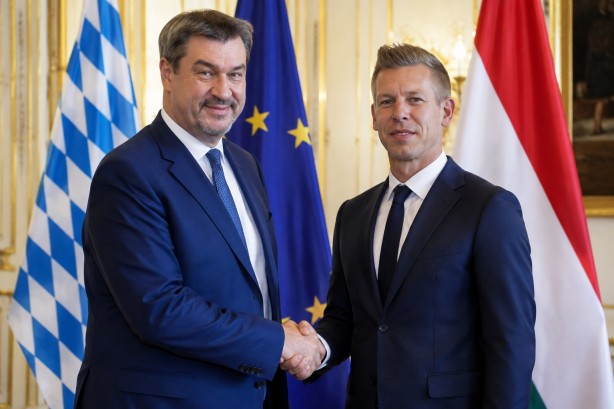
Bavarian Minister-President Markus Söder recently traveled to Budapest for significant discussions with Hungarian Prime Minister Péter Magyar. This meeting marks a noteworthy resurgence of high-level political interactions between Bavaria and Hungary, coming after an eight-year pause in such engagements. Both leaders took this opportunity to reaffirm their commitment to strengthening bilateral ties and exploring new avenues for collaboration.
During their talks, Söder and Magyar decided to establish a joint intergovernmental commission aimed at enhancing cooperation across several key sectors. These include trade, artificial intelligence, innovation, pharmaceuticals, defense, and higher education. The formation of this commission underscores a mutual interest in driving progress and fostering innovation, which both leaders see as essential for their economies and for Europe as a whole.
The discussions also touched on the broader European context, with Söder expressing approval of Hungary’s renewed alignment with the European mainstream. Both leaders agreed on the necessity to bolster Europe’s competitiveness on the global stage. In this vein, they called for a reevaluation of the planned phase-out of internal combustion engines, indicating a shared concern about maintaining economic vitality while transitioning to new technologies.
The economic relationship between Bavaria and Hungary was a focal point of the meeting, with both Söder and Magyar highlighting the significant role it plays in their respective regions. They noted that major Bavarian companies have a substantial presence in Hungary, employing tens of thousands of locals, which underscores the interdependence of their economies. This economic partnership is expected to be a core component of their future collaborative efforts.
Looking forward, the leaders have scheduled their next bilateral meeting for 2027. This planned meeting reflects a long-term commitment to nurturing the relationship between Bavaria and Hungary, ensuring that the dialogue and cooperation established during this visit will continue to develop and yield positive outcomes for both regions.