
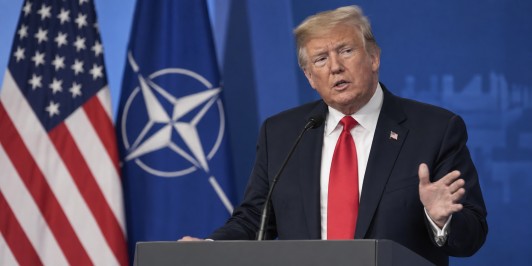
The international security landscape is witnessing a significant shift as NATO member countries have pledged to bolster their defence and security spending. Under a new agreement reached during the 2025 NATO Summit in The Hague, allies committed to increasing their defence budgets to 5% of their Gross Domestic Product (GDP) by 2035. This ambitious target marks a substantial increase from the previous 2% benchmark and reflects NATO’s broader efforts to enhance military capabilities and collective security across the alliance.
Announced at the United Nations General Assembly in New York, U.S. President Donald Trump welcomed this commitment, emphasizing its importance for the alliance. The revised spending guideline includes allocating at least 3.5% of GDP to core defence needs, while an additional 1.5% will be directed towards investments related to defence and security. This strategic move aims to ensure that NATO allies are better prepared to face current and future challenges.
As part of this commitment, European allies and Canada have already begun to increase their defence budgets. NATO reports indicate that these countries collectively boosted their core defence expenditure by nearly 20% in real terms in 2025 compared to the previous year. This surge in spending underscores the alliance’s dedication to strengthening its military infrastructure in response to evolving global threats.
Beyond financial commitments, President Trump also addressed the ongoing conflict between Russia and Ukraine during his UN speech. He called for a resolution to the war, highlighting the grave human cost it continues to inflict. The United States, he assured, remains committed to pursuing diplomatic solutions to bring an end to the hostilities.
These developments mark a critical moment for NATO as the alliance seeks to adapt to a rapidly changing security environment. The increased defence spending is seen as a pivotal step in ensuring that NATO can uphold its commitments to mutual defence and maintain global stability in the coming years.