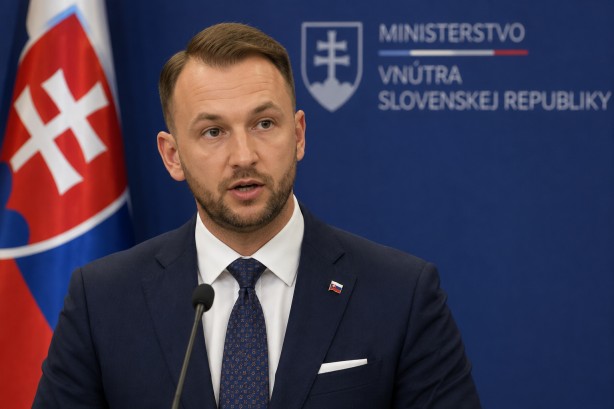
Slovak Interior Minister Matúš Šutaj Eštok has voiced concerns over what he describes as the European Union’s inconsistent approach in evaluating the rule of law in Hungary. During a television appearance in Slovakia, Eštok criticized the EU for its relatively subdued reaction to recent political changes under Hungarian Prime Minister Péter Magyar, contrasting it with the EU’s previous, more stringent responses to similar issues.
Eštok specifically targeted several political changes in Hungary, including the dismissal of the country’s president, modifications to the constitution, new restrictions impacting parliamentary members, and alterations to the public broadcasting system. He suggested that if these actions had been undertaken by former Prime Minister Viktor Orbán, the EU’s reaction would have been much harsher, potentially involving severe criticism and the imposition of sanctions.
The Slovak official also cast doubt on the European Commission’s handling of the situation, implying that the recent developments in Hungary have not been scrutinized as thoroughly by EU bodies as they should be. These comments echo previous statements made by Slovak Foreign Minister Juraj Blanár, who had earlier questioned the constitutional amendments in Hungary, arguing that changes affecting the presidency did not align with established rule-of-law principles.
The remarks by Eštok and Blanár add a new dimension to the ongoing political discourse surrounding the EU’s management of democratic and legal issues in Hungary. This debate continues to highlight the complexities and potential inconsistencies in how the EU addresses rule-of-law challenges among its member states.