
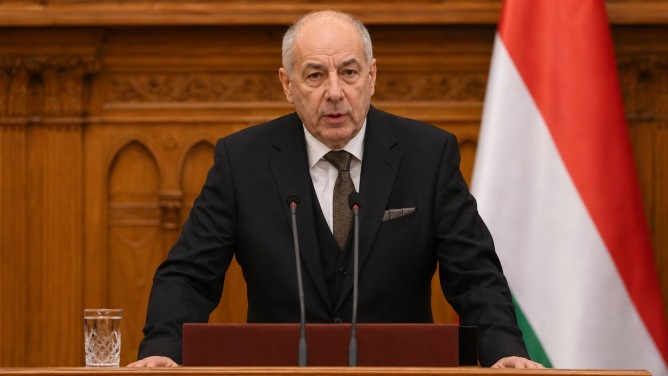
Hungary is embroiled in a deepening constitutional crisis following the approval of an amendment by lawmakers that seeks to prematurely end President Tamás Sulyok’s term. This legislative move, supported by the parliamentary majority, mandates that the current president sign off on the amendment for it to become effective. However, this requirement has led to a legal impasse, as President Sulyok’s endorsement would essentially curtail his own tenure.
During a gathering to commemorate the “Day of the Courts,” President Sulyok championed the sanctity of the rule of law and the autonomy of the judiciary, stressing that legal principles should transcend political maneuvering. His comments were widely interpreted as a direct counter to the unfolding constitutional drama. Concurrently, the president’s office issued a call for adherence to constitutional norms and cautioned against the unchecked exercise of legislative authority.
Constitutional analysts indicate that President Sulyok’s options are constrained by Hungary’s legal framework. He has the potential to challenge the amendment on procedural grounds by referring it to the Constitutional Court. Nonetheless, should the court determine the amendment is procedurally sound, the president would then be obligated to endorse it.
If President Sulyok opts not to sign the amendment, lawmakers could initiate impeachment proceedings or declare him temporarily incapacitated, which would allow the parliamentary speaker to temporarily assume presidential duties and ratify the legislation. This scenario has amplified broader apprehensions about the state of rule of law in Hungary, with legal scholars emphasizing that constitutional amendments must uphold legal certainty and maintain the independence of state institutions.