
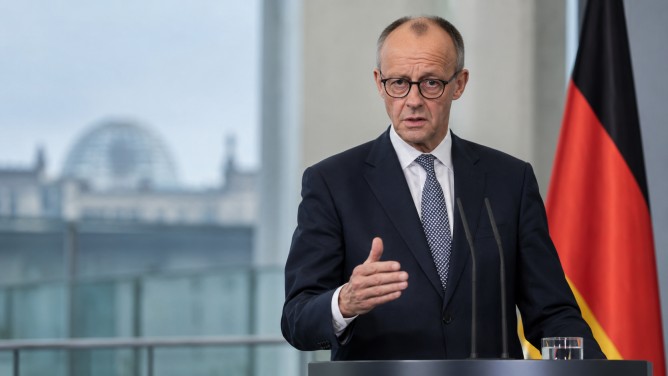
Germany’s political landscape is experiencing a shift, as regional elections in Berlin and Mecklenburg-Western Pomerania reveal deepening divisions and a surge in support for the Alternative for Germany (AfD). The elections have brought to light the challenges facing Chancellor Friedrich Merz’s Christian Democratic Union (CDU), which suffered notable setbacks in these key regions.
In Berlin, the left-wing party Die Linke claimed victory, garnering approximately 25.7% of the vote. The CDU, which hoped to strengthen its position, came in second with 18.8%, while the right-wing AfD secured third place with 16.3%. This outcome highlights the growing fragmentation within Germany’s capital as voters increasingly look to parties outside the traditional center-right and center-left spectrum.
The situation in Mecklenburg-Western Pomerania underscored the AfD’s rising influence, where it emerged as the leading party with around 38.2% of the vote. The Social Democrats closely followed with 35.5%. Meanwhile, the CDU faced a significant blow, receiving only 4.9% of the vote, which falls below the threshold needed for representation in the state parliament.
The results from these elections increase pressure on Chancellor Merz, particularly after the AfD’s strong showing in Saxony-Anhalt earlier this month. Despite these challenges, Merz has vowed to stay in office and continue his administration’s focus on economic and social reforms. However, the electoral outcomes are likely to spark intense debate within the CDU regarding its leadership and future strategy.
As the AfD solidifies its presence in Germany’s eastern regions and Die Linke gains ground in Berlin, the results underscore a growing political polarization. This shift is expected to fuel ongoing discussions within Germany’s political circles about the country’s direction and the responses needed to address voter concerns effectively.