
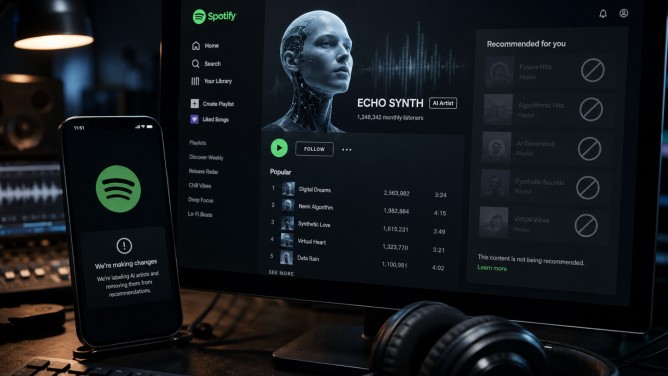
In a bid to address the increasing presence of artificial intelligence in the music industry, Spotify is set to implement new strategies aimed at identifying and managing AI-generated artists on its platform. Starting from September, profiles and track listings of AI-created artist identities will carry an “AI persona” label. This initiative seeks to help users differentiate between human musicians and artificial creations, while also safeguarding real artists from having their exposure diminished by AI-generated content.
As part of these changes, Spotify will ensure that AI personas are not included in personalized recommendations by default. This measure reflects the company’s commitment to maintaining a clear distinction between genuine artistry and AI-produced music. Despite allowing artists the option to self-disclose their AI-generated status, Spotify will also deploy a combination of human reviewers and advanced AI tools to identify those AI personas that have not been disclosed voluntarily.
The decision to introduce these measures comes amid a rapid increase in AI-generated music. Previously, Spotify revealed that it had removed 75 million spam tracks over a 12-month span, underscoring the vast influx of artificial and substandard content making its way onto music platforms. This statistic highlights the challenges faced by streaming services in maintaining content quality as AI technology becomes more prevalent.
Spotify’s latest approach underscores the growing importance of transparency in the music industry, particularly as generative AI technology becomes more widespread. Listeners are increasingly interested in knowing whether the artist behind their favorite tracks is a human or an AI-generated entity. By implementing these changes, Spotify aims to meet this demand for clarity and maintain the integrity of the music listening experience.