
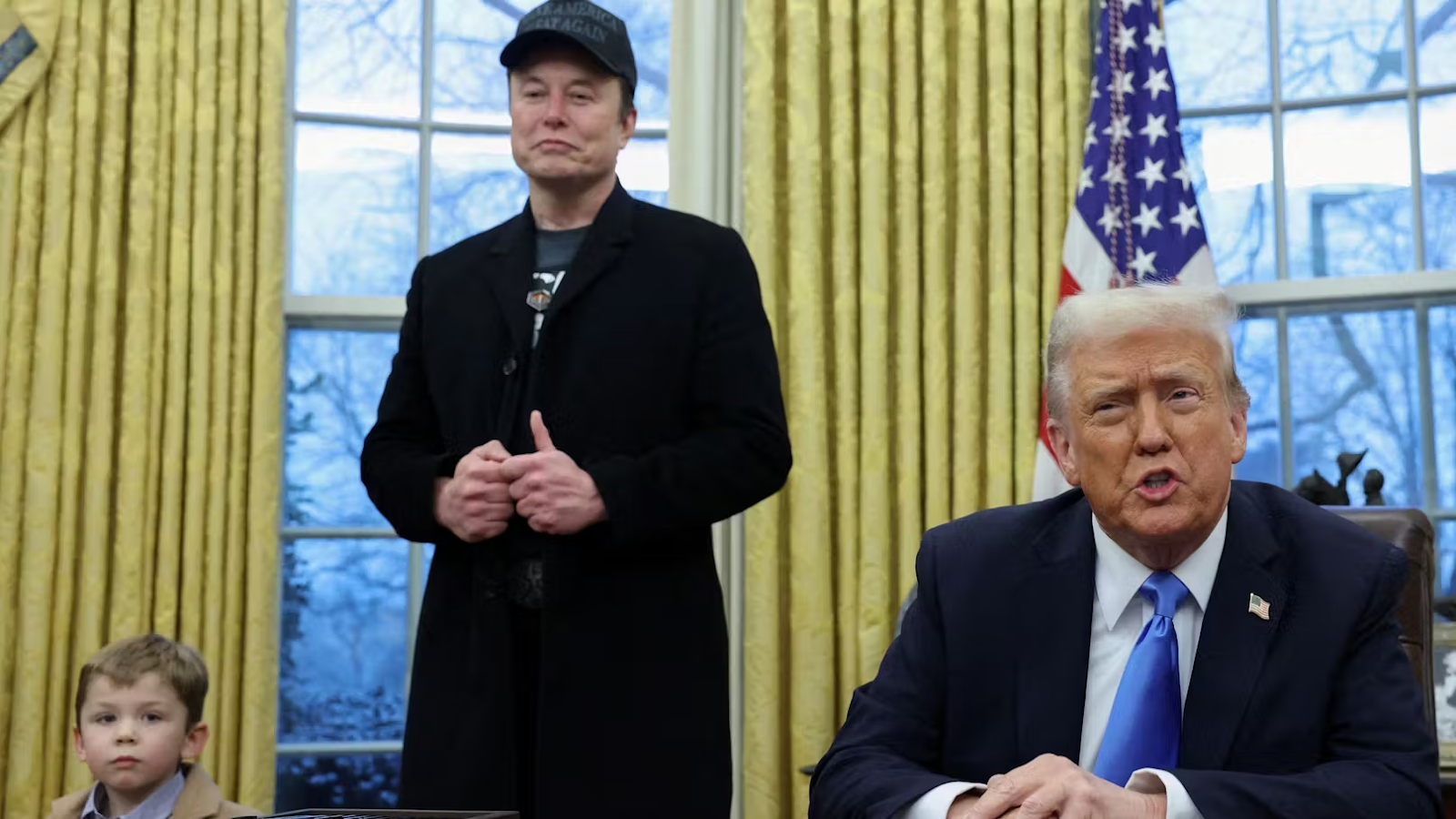
The Oval Office served as the backdrop for the departure of Elon Musk, who, for 138 days, served as a “special government employee” overseeing the Department of Government Efficiency (Doge). His highly publicized mission to unearth $2 trillion in waste within federal agencies concluded with a significant shortfall, generating questions about the true impact of his intervention.
President Trump, maintaining his characteristic theatrical flair, surprisingly framed the briefing as primarily about Musk, not himself. He showered the tech titan with accolades, calling him “one of the greatest business leaders and innovators the world has ever produced.” This commendation came despite reports of Musk’s plummeting popularity and a decline in Tesla’s stock value, reflecting a disconnect between official praise and public perception.
A particular news report, alleging drug use and criticism of a new tax bill by Musk, added a layer of complexity to the farewell. While the news organization was swiftly dismissed by Trump as “fake news,” Musk himself avoided directly addressing or refuting the claims, leaving a lingering sense of unanswered questions. This sidestepping of critical issues contributed to the unusual nature of the event.
The visible black eye on Musk’s face sparked immediate curiosity, with reporters pressing for an explanation. Musk’s surprisingly candid response—that it was due to horseplay with his five-year-old son—offered a moment of humanization amidst the political drama, yet also seemed to symbolize the bumps and bruises of his ill-fated Washington experiment. His parting shot at the left further underscored his polarizing persona.
Doge’s Architect Departs: Musk’s Washington Stint Ends Amidst Scrutiny
Picture credit: www.heute.at
86