
The fundamental challenge in resolving the current Japan-China crisis over Taiwan lies not in the technical details of diplomatic language or economic calculations but in the domestic political constraints facing leaders in both countries, according to international relations experts analyzing the situation. Sheila A. Smith, author of “Intimate Rivals,” observes that leaders on both sides face pressure not to appear weak before their respective domestic audiences, creating a situation where neither can easily back down without facing internal political costs.
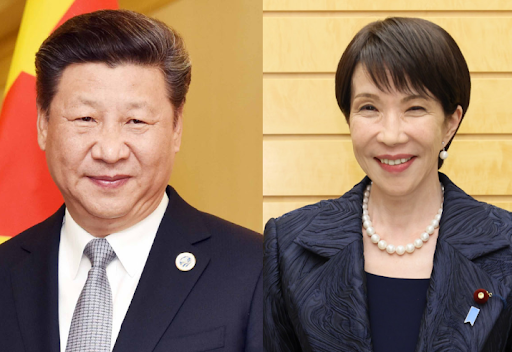
From Japan’s perspective, Prime Minister Sanae Takaichi’s statements about potential military involvement if China takes armed action against Taiwan resonated with constituencies concerned about regional security and Chinese military expansion. Retracting such statements or appearing to cave to Chinese economic pressure could undermine her political standing and credibility with these important domestic constituencies, particularly given broader public concerns about China’s intentions in the Indo-Pacific region.
Similarly, from Beijing’s perspective, Taiwan represents an issue where any perceived weakness or compromise carries enormous domestic political risk. Chinese foreign ministry spokeswoman Mao Ning’s demands that Japan retract what Beijing terms “erroneous remarks” and explicitly reaffirm commitment to the “One China” principle reflect not just diplomatic preference but fundamental policy on an issue viewed as non-negotiable domestically. Chinese leadership cannot appear to accept Japanese discussion of military involvement regarding Taiwan without facing internal criticism.
This mutual inability to compromise creates a particularly intractable diplomatic situation. While both governments maintain publicly that they seek to preserve positive bilateral relations—Takaichi emphasizes her commitment to a strategic, mutually beneficial relationship as discussed with President Xi Jinping—the concrete actions required to de-escalate the crisis would require one or both sides to accept domestic political costs that appear unacceptable in the current environment.
Historical precedents offer limited grounds for optimism about quick resolution. Smith notes that in past disputes between China and other countries, tensions often subsided only after leadership changes, as new leaders are not personally associated with previous controversial statements and can adopt fresh approaches without appearing to reverse course. Professor Liu Jiangyong of Tsinghua University indicates that China will continue implementing countermeasures gradually and secretly, while the economic costs mount with tourism losses projected at $11.5 billion and multiple sectors experiencing disruption. The diplomatic deadlock may persist as long as current leaders remain committed to positions they cannot abandon without unacceptable domestic political consequences.
Domestic Political Constraints Create Diplomatic Deadlock Between Japan and China
Picture credit: www.commons.wikimedia.org
28